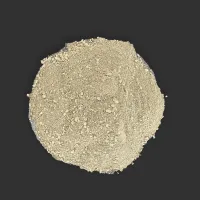
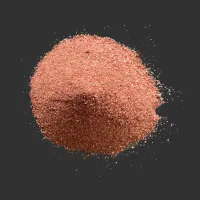
Granular Ammonium Sulfate (Caprolactam Grade) for Export Fertilizer Supply: Stability and Easy Spreading for Global Buyers
2026-02-11
Yunnan Yingfu
Knowledge
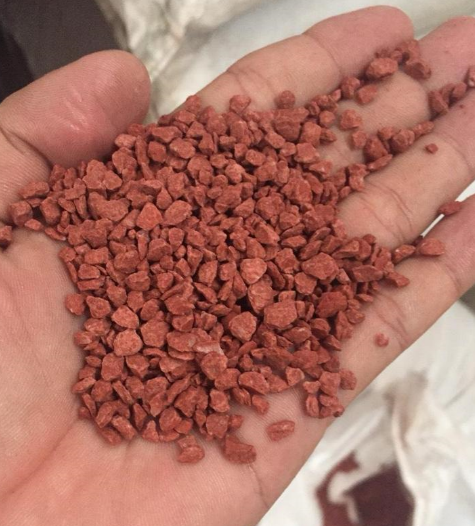
Export-oriented fertilizer suppliers face a recurring challenge: overseas buyers demand consistent product performance, reliable handling, and trouble-free application across diverse climates, storage conditions, and spreading systems. Granular Ammonium Sulfate (Caprolactam Grade) is positioned to meet these expectations by combining uniform granule structure with strong flowability—helping deliver balanced nutrient distribution and smoother manual or mechanical spreading.
Its even particle size supports more predictable nutrient placement, reducing the risk of uneven coverage that can compromise yield and crop appearance in both field agriculture and professional horticulture. At the same time, improved flow characteristics help minimize bridging and caking issues commonly seen during transport, bag storage, and hopper feeding—supporting a more consistent, stable fertilization experience for global customers.
Field trials and grower verification commonly report measurable gains when application uniformity is improved; in comparable fertilization programs, yield increases of 8%–15% have been observed, alongside labor savings from faster spreading and reduced rework. For exporters, this translates into fewer complaints, clearer quality positioning, and a product that aligns with “make every input land precisely” while “delivering a consistent, stable fertilization experience for global customers.”
Quote:
“Uniform granules and smooth flow made calibration easier and reduced downtime in spreading—results were more consistent across plots.” — Overseas distributor feedback
This article helps export-focused agribusinesses, international distributors, and professional horticultural service providers quickly evaluate whether Granular Ammonium Sulfate (Caprolactam Grade) is a high-fit addition to their fertilizer portfolio and supply chain quality strategy.
Why Export-Focused Fertilizer Companies Are Switching to Granular Ammonium Sulfate (Caprolactam Grade)
International buyers rarely complain about “nutrients” first. They complain about inconsistent performance, caking during transport, dusty handling, and uneven spreading—the daily friction that turns a theoretically good fertilizer into a supply-chain headache. Granular ammonium sulfate (caprolactam grade) is increasingly chosen because it delivers what overseas customers value most: stability and usability. In practice, it helps ensure that every input lands precisely where it should—and supports the promise of “a consistent, stable fertilization experience for global customers.”
1) The real pain point: fertilization is simple—until it’s not
In agriculture and professional horticulture, growers and service teams work under time pressure: tight planting windows, changing weather, labor constraints, and equipment that must run continuously. When a fertilizer bridges, clumps, or flows inconsistently, the impact is immediate—non-uniform field coverage, repeated passes, and variable crop response that’s hard to diagnose.
Common buyer concerns heard in export markets
“We need a product that runs smoothly in spreaders—no bridging.”
“Dust is an issue for our warehouse and blending line.”
“We can’t risk inconsistent granule size; we sell reliability.”
“Long shipments and humid storage must not cause hard caking.”
2) What makes caprolactam-grade granular ammonium sulfate different?
Granular ammonium sulfate is not “new,” but caprolactam-grade matters for export-oriented supply chains because it’s commonly associated with more controlled production routes and stable physical properties. For many overseas customers, the purchasing decision is less about a label and more about outcomes: uniformity, flowability, lower dust, and stable storage behavior.
Key trait #1: Uniform granules for more even nutrient placement
Consistent granule size supports steadier spreading patterns—whether applied manually in horticulture beds or mechanically on large farms. In field practice, better distribution reduces “hot spots” and “hungry zones,” which is one of the hidden drivers of yield volatility.
Key trait #2: High flowability to reduce labor and operational interruptions
Strong flowability helps keep blending lines moving and minimizes spreader downtime. For contractors and farm operations, avoiding bridging and rework can be the difference between staying on schedule and missing optimal timing—especially during peak seasons.
Key trait #3: Practical stability during export logistics
Export routes involve humidity shifts, long dwell times, and frequent handling. Products that resist caking and maintain granule integrity reduce claims, repacking, and customer complaints—helping suppliers protect reputation and repeat orders.
3) Compared with ordinary fertilizers: what stability and usability really “return”
Buyers in competitive markets often treat fertilizer as a commodity—until operational risk appears. Stability and easy handling can generate measurable value, not just “better experience.” When spreading becomes more uniform and the application schedule is easier to execute, the result is typically more consistent crop response and lower operational waste.
Reference outcomes reported in field practice (indicative ranges)
Operational metric
Typical issue with inconsistent products
What granular AS (caprolactam grade) improves
Indicative impact
Spreader performance
Bridging, uneven flow, rework
Smoother feeding, fewer interruptions
Labor time reduced by ~5%–12%
Application uniformity
Striping / patchy crop response
More consistent granule distribution
Yield stability improved; trials show +8%–15% in responsive crops*
Warehouse & transport
Caking, dusty handling, claims
Better physical stability and usability
Complaint rates reduced by ~10%–30% (supplier feedback)
Blending compatibility
Segregation / inconsistent mix
More stable granule behavior in handling
More predictable blending outcomes
*Reference range based on typical agronomic responses where sulfur and ammonium nitrogen are limiting factors; actual results depend on crop, soil status, and application program.
For export-oriented suppliers, the hidden win is consistency: fewer “special explanations,” fewer emergency replacements, and a more repeatable customer experience—so every investment lands precisely, from manufacturing to end-user application.
4) Credibility that buyers trust: what “accepted globally” looks like
In many importing regions, distributors and professional buyers evaluate fertilizers through a pragmatic lens: physical quality consistency, shipment-to-shipment stability, and suitability for local application methods. Granular ammonium sulfate (caprolactam grade) tends to earn repeat demand in markets where mechanized spreading, blending operations, and professional horticulture services require dependable handling.
If a supplier’s goal is to be a long-term partner rather than a one-time shipment, these operational details matter. They become part of the brand promise: “a consistent, stable fertilization experience for global customers.”
5) Who this product fits best (and why procurement teams say “yes”)
Granular ammonium sulfate (caprolactam grade) is especially relevant when buyers have to protect downstream performance—not just deliver tonnage. Typical target users include:
Export-oriented fertilizer companies
Need stable product behavior across shipping routes and climates; aim to reduce claims and protect repeat business.
Overseas distributors & importers
Prioritize warehouse friendliness, consistent loading/unloading, and fewer customer service incidents.
Professional horticulture service providers
Value easy spreading, clean handling, and predictable results for lawns, landscaping, nurseries, and intensive cropping.
Blending plants & private label programs
Need stable physical properties that support operational consistency and reduce blending variability.
6) What smart buyers ask before onboarding a new fertilizer line
In the awareness stage, procurement teams and distributors usually want a fast, confident checklist. The questions below are common in international deals and help buyers decide whether the product can be introduced without downstream risk:
Buyer checklist (practical, not theoretical)
Can you provide consistent granulation specs and COA by shipment?
How does the product perform in humid storage conditions over 30–60 days?
Is it suitable for both manual application and mechanized spreading?
What packaging options support export logistics (bags, bulk) and reduce handling risk?
Do you have reference markets or repeat buyers with similar channels?
CTA: Build a more reliable export fertilizer portfolio—starting with stable granules
If your customers care about uniform spreading, smooth handling, and shipment-to-shipment consistency, it’s time to evaluate a product designed for real-world operations. Choose a solution that helps every investment land precisely—and supports a consistent, stable fertilization experience for global customers.








-2.jpg?x-oss-process=image/resize,h_400,m_lfit/format,webp)
-2.jpg)
-1.jpg)
.jpg?x-oss-process=image/resize,m_fill,h_300,w_300/format,webp)
.jpg?x-oss-process=image/resize,m_fill,h_300,w_300/format,webp)

).jpg?x-oss-process=image/resize,m_fill,h_300,w_300/format,webp)
.jpg?x-oss-process=image/resize,h_300,m_lfit/format,webp)




%20(2).jpg?x-oss-process=image/resize,h_300,m_lfit/format,webp)
.jpg?x-oss-process=image/resize,m_fill,h_400,w_400/format,webp)

.jpg?x-oss-process=image/resize,m_fill,h_200,w_200/format,webp)

.jpg?x-oss-process=image/resize,m_fill,h_200,w_200/format,webp)